The Canadian Church's Support of the Holy Land
On March 25, 1974, Pope Paul VI issued an Apostolic Exhortation, Nobis in Animo, emphasizing that Catholics everywhere should unite themselves with the Church in the Holy Land through prayer and material help for the Christians living there, and he decreed that a collection should be taken on Good Friday in dioceses throughout the Catholic world as an expression of their Church’s support of our brothers and sisters throughout the region known as the Holy Land. It was the first universal collection asked by the Holy See; and of course, our Canadian Church participated whole heartedly.

This was not, however, the first time that the Pope asked or that Bishops permitted collections for the support of the Holy Land. In Canada, in the late 19th century, and at the request of Franciscan Father Frédéric Janssoone, the Bishops of Quebec began to take an annual collection. During the last century money from these dioceses and elsewhere in the Canadian Church, including private donations, helped to restore the Holy Sepulchre, expand the Saint Saviour friary complex, build St. Catherine’s parish and friary complex next to the Basilica of the Nativity, and develop Shepherds’ Field.

tomb of Jesus
The Church of the Holy Sepulchre commemorates Christ’s Passion, and recalls the final moments of Christ’s earthly life under one roof. Golgotha, the place of the crucifixion, now borders part of the church; the Stone of Anointing, where traditionally Jesus’ body was prepared for burial, is found there; and located in the centre of the church is the tomb, or Edicule, from which Christ rose on the third day. The church was originally built by Emperor Constantine around 336 AD, destroyed in 1009, and rebuilt by the Crusaders in the 12th century. The church has survived multiple earthquakes and fires, with major renovations in the 19th century which account for its current appearance. The church is maintained under a strict arrangement known as the "Status Quo" by three primary Christian communities: Greek Orthodox, Armenian, and Roman Catholic churches, which is entrusted to the care of the Franciscan Custody of the Holy Land.

the Kavass
There is an interesting tradition which dates from 1187, when Saladin recaptured Jerusalem from the crusaders but allowed Christians to worship at the Holy Sepulchre. Saladin entrusted the guarding and the keeping of the church’s keys to two Muslim families, whose descendants perform the task of unlocking the doors; while the descendants of other Muslim families, the kavass, continue to escort or guard Christian clergy, including Franciscans, in processions to ensure order and signal the arrival of dignitaries These hereditary traditions serve as a symbol of religious tolerance and peace in Jerusalem.

Saint Saviour’s Church and friary complex became established between 1551-1560 after the Ottoman Empire invaded Jerusalem and evicted the Franciscans from their 14th century friary, the Cenacle, on Mount Zion. With permission from Sultan Suleiman the Magnificent, the Franciscans were permitted to purchase this site, a former monastery, and build a church and friary. For nearly two centuries, this location was the only Catholic parish in Jerusalem and the present church, now a basilica, was constructed between 1882 and 1885. From the time of its establishment, Saint Saviour’s Church and friary complex served as the headquarters of the Custody of the Holy Land and , housed a library, printing press, and pharmacy, and became the center for Latin Catholics; today it also contains a seminary, the Library of the Holy Land, a music school, and the Terra Sancta Museum.

and courtyard, larger Nativity complex
Saint Catherine’s parish church and friary complex, in Bethlehem, was built at the end of the 19th century on the ruins of an ancient church next to the Basilica of the Nativity, which was constructed in the fourth century to mark Jesus’ birth place. Saint Catherine’s is cared for by the Custody of the Holy Land and functions as a parish church within the Latin Patriarchate of Jerusalem, and it is part of the larger Nativity complex designated as a UNESCO World Heritage Site. The Basilica contains the ancient Grotto and is the central pilgrimage site, while Saint Catherine’s, although functioning as an active parish church, also plays a complementary spiritual and liturgical role for pilgrims visiting the Nativity site by providing access to the Grotto and to the Caves of St. Jerome.
Shepherd’s Field is another sanctuary, not far from St. Catherine’s and the Basilica of the Nativity, where numerous chapels are located in a quiet park-like environment. The Canadian Church’s support of that development began nearly a century ago, and more recently has helped to fund the construction of parking areas and pedestrian pathways to provide easier access to the Shepherds’ Field site for pilgrims and visitors.
The Canadian Church’s Recent Contributions
In the past few years, the Canadian Church has helped to support various projects that the Custody of the Holy Land has undertaken to care for the people, to provide for pilgrims, and to safeguard the Holy Places within Palestine and Israel. Almost all of these projects are ongoing and need to be done in various amounts and locations year after year. There are projects that contribute to the social and pastoral care of the community, supporting the daily life of men and women who struggle to maintain their Christian identity. Other projects, such as the education and formation of young Franciscans religious, and the educational outreach to local Christians and pilgrims, are necessary to assure the continued care for the Holy Land. The renovation and restoration of buildings, parishes, or service centres, which assure presences at Holy Sites, are also projects that require regular attention. And there is the never-ending upkeep and development of Holy Places, so important for pilgrims and for promoting an understanding and deepening the faith of Christians everywhere.
Social aid for the people

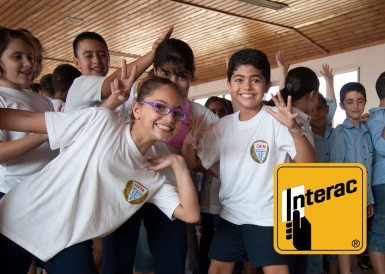
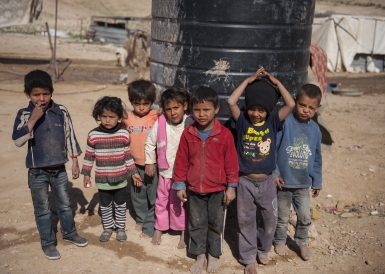
A large part of the Canadian Church’s financial support of the Holy Land has been used by the Franciscan Custody to help Christians in their daily life, foster their faith and education, support them as a small and unique community among other religious, and to promote their sustained presence in the Holy Land.
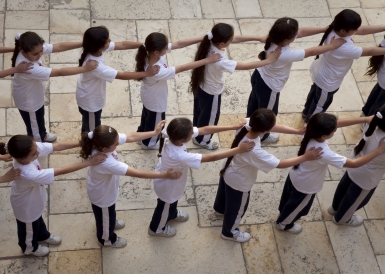
Schools, which have existed since 1589, continue to assure the faith formation and education of Christians, equipping youth for the future and enabling them to keep their identity and their presence in this land, as a minority and in difficult situations. These schools are in constant need of maintenance and technical upgrading. The school in Acre, founded in 1620, has been a landmark for education and intercultural encounters. It was given a "new life", completely renovated, and inaugurated on 1 September 2023.
Renovations were also made to the school in Jaffa where, because of water damage, parts of the building and the interior courtyard needed reinforcement and repair.


at St. James’s parish community centre, Beit Hanina
Every year, more particularly in Jerusalem, the Custody renovates and restores old buildings which it has owned for centuries to create apartments that are made available to Christian families who are unable to afford or to obtain housing. Generally, the construction of these old building is poor: there are structural problems due to the frequent addition of floors on top of floors; difficulties with water and sewer drainage; and problems with obsolete electrical systems. Often work is slow and complicated due to building codes, and lack of easy access by large construction equipment.
St. Jame’s Parish Centre, in Beit Hanina, a northern suburb of Jerusalem, has benefitted from the Canadian Church’s support. The Custody established a Parish Centre which offers programs and activities for children, youth, and adults, such as after-school programs, sports and recreational activities, and summer camps. The most recent undertaking will be to provide support for youth and will consist of renovating a piece of land with artificial turf pitch, new goal posts and electric scoreboard. Additionally, a smaller playing area is planned. All this will enhance the quality and functionality of St. James Parish Centre, providing improved facilities for young football players, coaches, referees, and adult spectators alike.
Preparing for the future Christian presence in the Holy Land


Every year a portion of Canada’s contribution to the Holy Land is used for the formation of the Franciscan friars who are being prepared to care for the pastoral needs of Catholics and for the holy sites. The formation of these young men consists of a long process of postulancy, novitiate, and philosophical and theological studies. A very important part of their formation, available only on location, is learning about the Roman Church’s centuries-long claim to some holy sites and the agreed-upon sharing of other holy sites – i.e., learning about and understanding the “Status quo” – with other Christian denominations; as well as learning about the traditional liturgical practices particular to the different sanctuaries. Another necessary and integral aspect of the young friars’ formation is learning modern Hebrew or Arabic and, of course, learning or perfecting English which is much used by many peoples throughout the Middle East. The support of the Canadian church provides for the expenses of room and board, and other educational expenses during this long period of pastoral and intellectual preparation which is necessary if there are to be people capable of assuring a Christian presence in this region of different religions.

The church of the Flagellation, where the second station on the Way of the Cross is located, is part of a larger Franciscan friary complex and is where young friars study scripture and theology. The Flagellation Museum is located here and serves as a learning centre for students as well as for pilgrims visiting along the Via Dolorosa. The first and second floors of the friary complex serve as a residence and provide meeting rooms; the ground floor has been refashioned to house the archaeological museum. The building complex required major renovation on three floors using a system of reinforced concrete columns, walls, beams and thin slabs. Repairs were also required due to rusting pipes and high electrical expenses, so a new system of heat-pumps supported by solar panels and adequate water storage was installed. Also, because the Sanctuary of the Flagellation is very popular with pilgrims, and has been the subject of vandalism, it was necessary to improve security by installing new cameras and a control system.
Assuring the Possibility of Welcoming Pilgrims
In old Jerusalem, since the 16th century, St. Saviour’s friary complex has been the heart of the Custody’s central administration centre, as well as a parish church, and a student residence. It has undergone extensive renovation in the past years, thanks to Canadian support. Recently, the residential part of the complex was equipped with a new elevator. The work included the dismantling of the old elevator, the adaptation of the existing shaft, the installation of a new electrical system and finally fitting a new cabin. The friary complex also renovated its tailoring shop and laundry which provides care for the religious vestments of friaries and sanctuaries in Jerusalem as well as for neighbouring pilgrim facilities, such as Maria Bambina. Because of the high volume of work and inadequate and malfunctioning equipment some machines had to replaced, and some maintenance was required to rationalize space and improve work efficiency. Very close to the Saint Saviour complex, the Custody has a large storage area containing reuseable construction materials. Cleaning and reclaiming this location was a major time-consuming project which involved hiring workers, relocating useable products, removing rubbish, and general cleaning.
Maria Bambina, located close to the Church of the Holy Sepulcher, is a building that has belonged to the Custody for centuries. Formerly, it was a Franciscan run orphanage for girls. The Sisters of St. Elizabeth cared for the orphans and now they continue to administer the building as a hostel for pilgrims. Renovations were undertaken and regular maintenance is required t assure that this convenient location remains a simple but attractive dwelling place for pilgrims to the Holy Land.

Mount Tabor, the place of Jesus’ Transfiguration, has been a pilgrim site since the Byzantine Era and today it consists of a church and larger pilgrim complex. Several years ago, as part of a general improvement project, the Custody began to renovate a former convent for the Carmelite Sisters (also present in the Franciscan parish of Ramleh) who will help the friars of the Custody of the Holy Land to welcome pilgrims. This project, supported in part by the Canadian Church, aimed to provide adequate living conditions and required the reorganization of residential, domestic, and public spaces. Additionally, a Conference Hall was renovated with a new electrical system, floor tiling, painting, and with a new AC system.
Upkeep of Holy Sites
For the past five years, the Canadian Church has participated in various aspects of restoration undertaken at Ain Karem, the site of the Visitation and the birthplace of John the Baptist, and in the church of St. John in the Mountain. The major work began in 2020 with the restoration of the Sacristy which consisted of dismantling furniture and stone floor tiles and undertaking archeological excavation before starting on stabilising the building’s structure, restoring stone walls and plastering. Due to the Covid pandemic, this work was only completed in September 2023. Since then, there was additional follow-up work, and the installation of new electrical and AC systems.

Dominus Flevit, overlooking Jerusalem and the Dome of the Rock
The Sanctuary and church of Dominus Flevit, built upon the ruins of a 7th-century Byzantine church, commemorates the place where Jesus wept over the future destruction of Jerusalem (Luke 19:41-44). The Franciscan Custody’s project to rehabilitate the sanctuary was divided into several phases, the first phase consisted of renovating an existing two-storey building located to the north of the church. The building was a double dwelling, and the two floors were separated to provide individual entrances for different functions. Detailed architectural and engineering plans were completed; and the ground floor was developed into a sacristy for a small future chapel; the first floor was developed into a guest house for priests.
The Magdala Sanctuary is one of the most important recent archaeological sites belonging to the Custody of the Holy Land and it will soon be open to visitors. Magdala was a thriving port city on the western shore of the Sea of Galilee during Jesus’ time, and it is imaginable that the disciples, the Master and even Mary Magdalene walked the city streets. The site is interesting since it represents part of the Galilean region that Jesus chose to announce the Kingdom of God. The site still needs to be improved and made safe, but a small Franciscan community will be established there to care for pilgrims. Presently, the Custody is preparing a parking area for visiting pilgrims’ buses and cars.